
Homemade small business ideas that actually make money, 50+ low investment & profitable ways to earn from home. It can be your way out if you feel stuck with low income, rising bills, or no job security.
You may want to earn from home, but you worry about money, skills, or risk. The good news is that you don’t need a big office or a big loan to get started.
Many trusted business platforms, such as Forbes, Entrepreneur, and Etsy, indicate that low-investment home-based businesses are experiencing rapid growth. Regular people are turning simple DIY skills into profitable income streams.
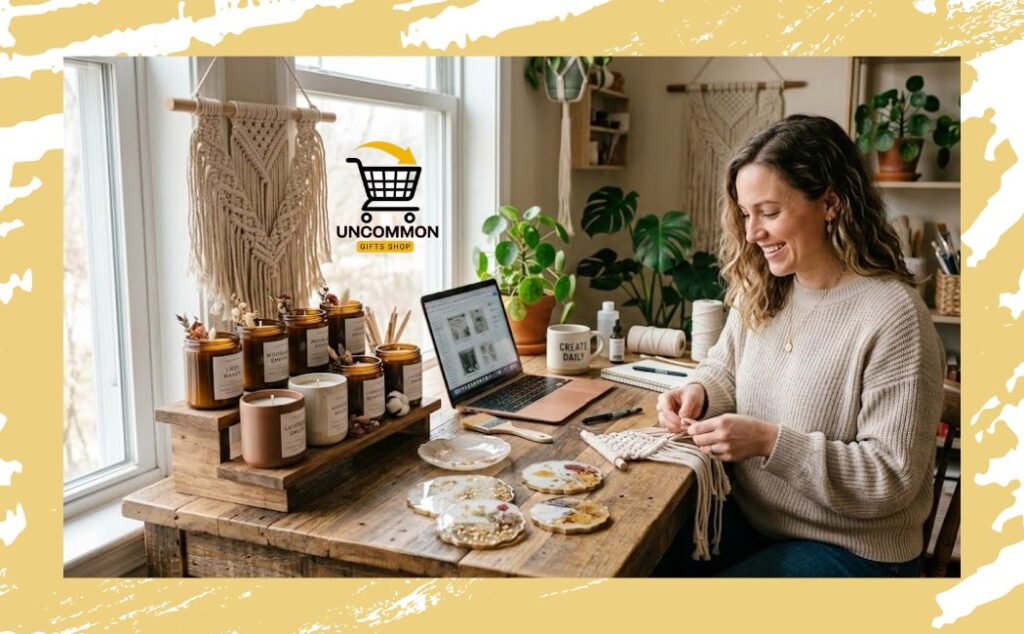
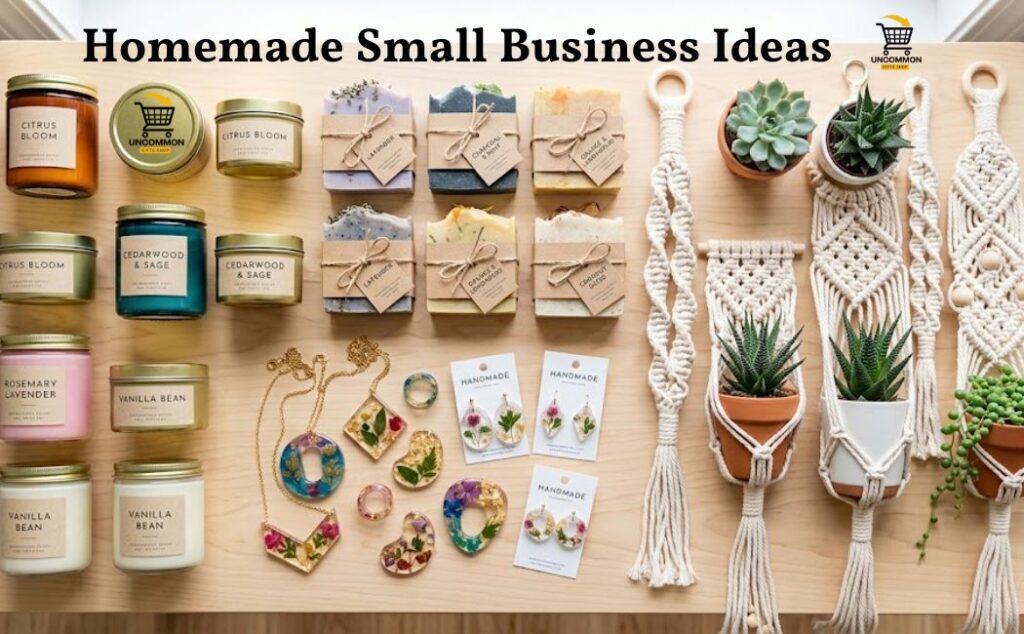
You can start small with handmade products like soy candles, resin art, handmade soap, or polymer clay jewelry.
These are easy to learn and simple to sell on platforms like Etsy, Shopify, or Facebook Marketplace. If you prefer food, a cottage food business with baked goods or homemade hot sauce can also work, as long as you follow local rules.
The key is a simple and unique idea, choosing, keeping your costs low, testing demand, and focusing on profit margin. When you take one clear step instead of waiting for the perfect moment, your small home idea can slowly grow into a steady monthly income.
Why Homemade Businesses Are Growing So Fast Right Now?
You may feel like everyone around you is starting something from home. That is not your imagination. Reports and expert insights shared by platforms like NerdWallet and Forbes show that small home businesses and side hustles are rising every year. People want control. People want extra income. People want safety.
You no longer need a shop or a big team. You can open a store online in one day using Shopify or list your handmade products on Etsy. You can even sell locally using Facebook Marketplace. Social media platforms like Instagram and TikTok Shop let you show your product to thousands of people without paying for a physical store.
Another reason is low investment. Many homemade small business ideas need less than $100 to start. You can test one product, see if people buy it, then grow slowly. This lowers your risk. You do not lose big money if it fails. You learn and improve.
You are also living in the creator economy. Buyers now love handmade products. They want unique gifts, custom items, and a personal touch. They trust small brands more than big factories. That gives you an advantage.
So if you are waiting for the “perfect time,” this is it. The tools are simple. The cost is low. The demand is real.
What Makes a Homemade Small Business Profitable?
You do not just want an idea. You want a profitable business. So before you pick anything, you need to understand what makes a homemade small business idea work.
1. Your startup cost must be low: A smart, low-investment business lets you test without stress. If you spend only $50 to $200 at the start, your risk stays small. This is why many beginners choose handmade products like candles, soap, or simple DIY crafts.
2. Your profit margin must be healthy: If it costs you $5 to make something, you should sell it for $15 or more. That extra money covers packaging, marketing, and your time. Without a profit margin, you are just busy, not successful.
3. Demand matters: You must sell things people already search for. Look at trending items on Etsy or popular listings on Amazon Handmade. If many people are buying, that is a good sign.
4. Keep it simple: Do not start with 20 products. Start with one. Test it. Improve it. Grow slowly.
5. Think about legal safety: In many places, you can begin as a sole proprietorship. Later, you can register a Limited Liability Company (LLC) if you grow bigger. If you sell food, you must check cottage food laws in your area.
However, marketing is not optional. Even the best product will not sell if nobody sees it. You can start for free by posting on Instagram or listing on Facebook Marketplace.
When you mix low cost, real demand, good profit margin, and simple marketing, your homemade business has a strong chance to succeed.
Most Successful Handmade Product Businesses You Can Start Today
Now you need real options. Below are homemade small business ideas that are low-cost, simple to start, and proven to sell.
1. DIY Craft Businesses: High Demand, High Margin
If you enjoy making things with your hands, this is a strong place to start.
You can create:
- Soy candles
- Handmade soap
- Resin art
- Polymer clay jewelry
- Macrame plant hangers
- Handmade greeting cards
- Personalized gift boxes
These products sell well because buyers love unique gifts. They also have good profit margins. For example, a candle that costs $4 to make can sell for $15 to $25.
You can sell your handmade craft business products on:
- Etsy
- Shopify
- Facebook Marketplace
Start with one product. Make 10 pieces. Test demand. Then grow.
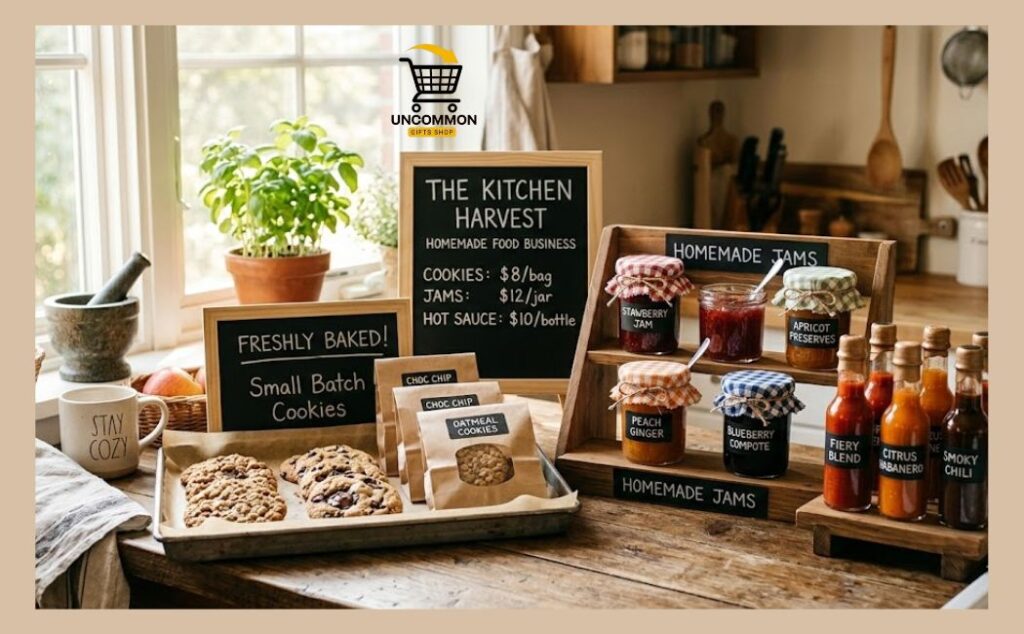
2. Small Homemade Food Business Ideas
If you love cooking or baking, this can turn into real income.
Popular items include:
- Baked goods
- Homemade hot sauce
- Pickles
- Specialty jams
- Spices mix
- Coffee blends
Food businesses can grow fast because people always buy food. But you must check local cottage food laws first. Follow labeling rules. Keep hygiene strong.
Many small sellers begin locally, then expand online once demand grows.
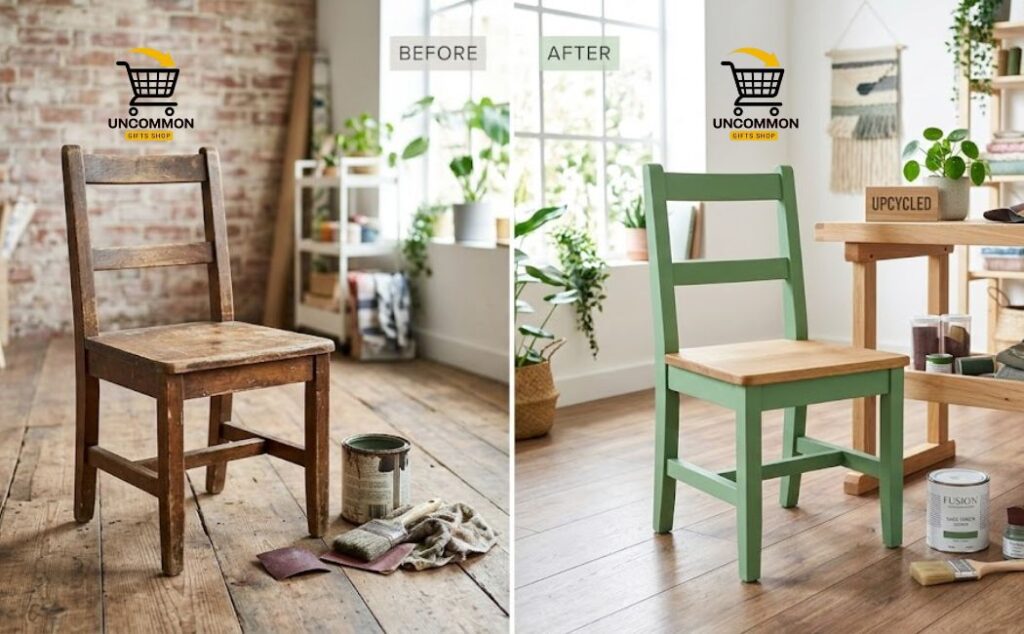
3. Upcycling & Furniture Flipping
If you enjoy fixing things, this can be very profitable.
You can:
- Buy old chairs or tables
- Repaint or repair them
- Resell at a higher price
This is called furniture flipping. It works well because people love stylish home décor at a lower cost.
Most sellers use:
- Facebook Marketplace
One good flip can bring $100–$300 profit.
How to Choose the Right Homemade Business for You?
Now you may feel excited. But you might also feel confused. There are many homemade small business ideas. So how do you choose the right one? You do not pick what looks trendy. You pick what fits your life.
Step 1: Check Your Budget
Ask yourself:
- Do you have $50?
- Do you have $200?
- And do you have $500?
If your budget is very small, start with digital services or simple DIY crafts. According to retail insights shared by Lightspeed, many small profitable businesses begin with very low inventory and grow slowly.
Low cost means low stress.
Step 2: Check Your Skills
You already know something.
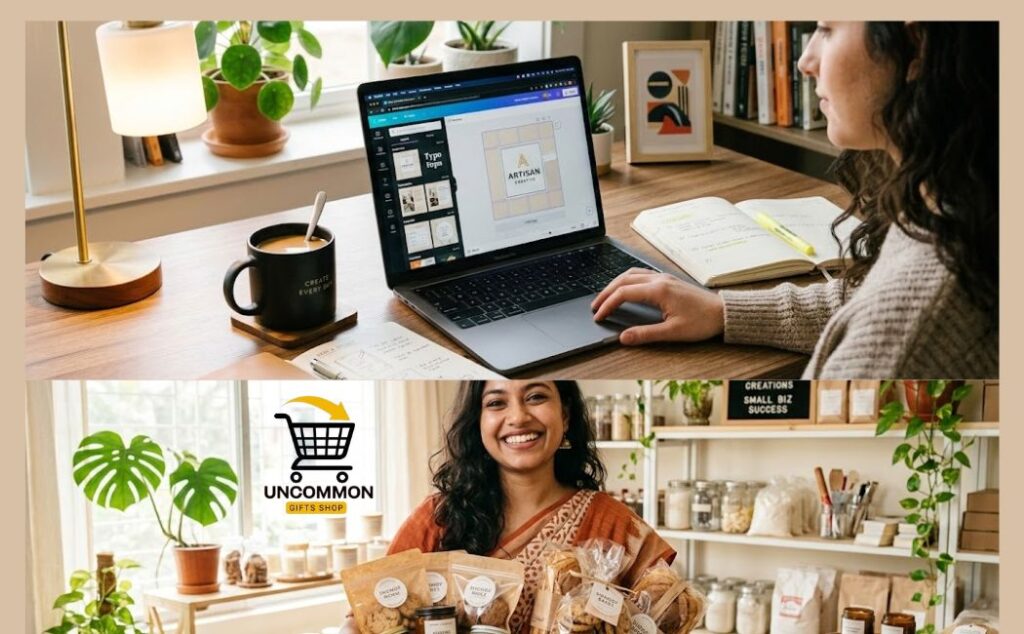
- Can you design?
- Can you cook?
- Also, can you teach?
- Can you edit videos?
- Can you repair furniture?
Do not wait to become perfect. Start with what you know. Improve while earning.
Step 3: Check Market Demand
Before you make 100 products, test first. Search online:
- What is selling?
- What has many reviews?
- What has repeat buyers?
Marketing experts from WordStream often explain that demand matters more than passion. If people are searching and buying, that is your green light.
Step 4: Decide Your Growth Goal
Ask yourself:
- Do you want a quick side income?
- Or do you want a full-time business?
- Do you want passive income?
- Or active daily work?
For example:
- Handmade crafts = medium effort, steady growth
- Food business = local strong demand
- Digital services = high growth potential
- Print-on-demand = scalable but competitive
Step 5: Start Small and Test Fast
Do not build a big brand on day one.
Instead:
- Create 5–10 products
- Offer your service to 2–3 clients
- Sell locally first
- Ask for feedback
- Improve
Small testing reduces failure risk. This is why most successful small business ideas start simple.
When you choose based on your budget, skill, and demand, your homemade small business idea becomes clear. You stop guessing. You start building.
How to Make Your First $100 – $1,000 from a Homemade Business?
You now have an idea. You know what to sell. The next step is turning it into real cash. Many beginners worry they won’t make money fast. The truth is, with the right approach, you can start earning within weeks.
Step 1: Start with a Small Batch
- Make only 5–10 products first, or offer your service to a few clients.
- This lets you test the market without spending too much money.
- For example, a small batch of soy candles can cost $20 to make but sell for $80+ if marketed correctly.
Step 2: Use Quick-Sale Platforms
- Etsy and Shopify for online buyers
- Facebook Marketplace for local sales
- Instagram or TikTok Shop to showcase products to thousands
Platforms give your product visibility fast, which is key to making your first $100 or more.
Step 3: Offer Pre-Orders or Limited-Time Deals
- Launching with a limited number creates urgency.
- Offer a discount for the first 10 buyers or a bundle deal.
- This can boost early cash flow and give you valuable feedback.
Step 4: Price Smart
- Calculate your cost and add profit margin.
- Example: $5 to make a candle → sell for $15–$25.
- Don’t undervalue your time and materials.
Step 5: Reinvest and Scale
- Use your first profits to buy more materials or tools.
- Expand listings, try another platform, or promote on social media.
- Gradually, $100 can become $500, then $1,000 per month.
When you take small, strategic steps, your homemade business stops being just an idea, and it starts generating real income.

Common Beginner Mistakes That Kill Homemade Small Businesses
Homemade Small Business Ideas are the best ideas can fail if you make simple mistakes. Knowing these early can save you time, money, and frustration.
1. Pricing Too Low
- Many beginners undercharge to “attract buyers.”
- Selling below cost means no profit, even if you sell a lot.
- Always include material cost, time, and packaging in your price.
2. No Marketing Plan
- A great product won’t sell if nobody sees it.
- Relying only on word-of-mouth or one platform limits growth.
- Use social media (Instagram, TikTok Shop) and local online marketplaces (Facebook Marketplace) consistently.
3. Lack of Niche Focus
- Trying to sell everything to everyone confuses buyers.
- Focus on one product type or audience first.
- Example: Start with soy candles before adding soaps, jewelry, and wall art.
4. Ignoring Legal Rules
- Not registering your business or ignoring cottage food laws can create problems.
- Check if you need a business license, sales permit, or LLC, depending on your region.
5. Quitting Too Early
- Many small home businesses take time to grow.
- Expect slow months at first and focus on improvement.
- Consistency beats perfection.
6. Overcomplicating Your Start
- Starting with 20 products, multiple platforms, or advanced tools can overwhelm you.
- Start small, test demand, and scale slowly.
By avoiding these mistakes, your homemade small business ideas are much more likely to succeed.
What Are the Best Homemade Small Business Ideas to Start at Home?
You can structure it like this for homemade small business ideas:
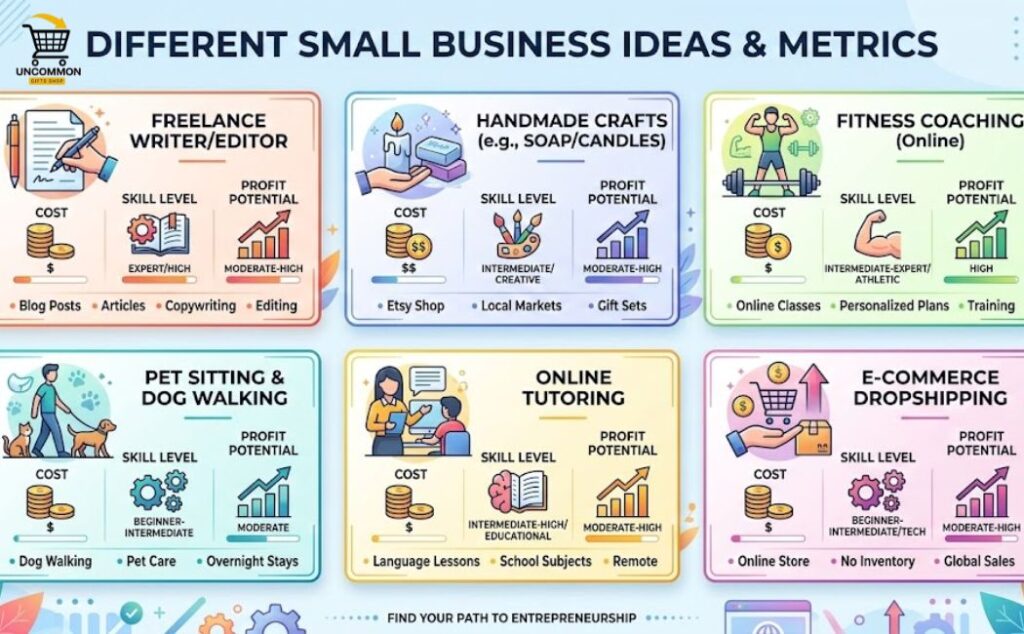
| Business Idea | Startup Cost | Skill Needed | Profit Potential | Best Platform |
| Soy Candles | $50–$100 | Beginner | Medium–High | Etsy, Shopify, Facebook Marketplace |
| Handmade Soap | $30–$80 | Beginner | Medium–High | Etsy, Shopify, Instagram |
| Resin Art | $50–$150 | Beginner–Intermediate | High | Etsy, Pinterest, Instagram |
| Macrame Plant Hangers | $20–$50 | Beginner | Medium | Etsy, Facebook Marketplace |
| Baked Goods | $50–$100 | Beginner | Medium | Local market, Etsy (digital orders) |
| Upcycled Furniture | $50–$200 | Beginner–Intermediate | High | Facebook Marketplace, Pinterest |
| Virtual Assistant | $0–$50 | Beginner | High | Online freelance platforms |
| Online Tutoring | $0–$50 | Beginner–Advanced | High | Zoom, Google Meet, Fiverr |
| Graphic Design | $0–$100 | Beginner–Advanced | High | Etsy, Fiverr, Upwork |
| Print-on-Demand | $0–$50 | Beginner | Medium–High | Shopify, Etsy |
Regional & Location-Specific Homemade Business Ideas
Some homemade small business ideas work better depending on where you live. Targeting your region can give you a real advantage because you understand local demand, shipping, and trends.
Here are some practical examples of homemade small business ideas:
| Region / Country | Business Idea | Why It Works | Notes |
| Philippines | Homemade food business | High demand for specialty snacks and baked goods | Follow local cottage food laws |
| Tamil Nadu, India | Handmade jewelry & textiles | Rich culture of crafts and local buyers | Target festivals and online platforms |
| Small Towns (US/UK) | Upcycled furniture & DIY décor | Less competition, higher demand for unique items | Use Facebook Marketplace and local markets |
| Urban Areas | Digital services (VA, graphic design) | Many small businesses need support | Work online, low cost, scalable |
Why Homemade Small Business Ideas Matter:
- Local demand is easier to tap than global at first.
- Shipping costs and legal rules are simpler to manage regionally.
- You can test products or services locally before scaling online.
Focusing on your region first helps you earn fast, learn your market, and avoid unnecessary risks.
Conclusion: Take Action on Your Homemade Small Business Idea
Now you have everything you need to get started. You understand the types of homemade small business ideas, the platforms to sell on, the cost, and the skills needed. You’ve seen what works locally, online, and digitally.
The key takeaway is simple: start small, test fast, and grow steadily. You do not need a big loan, a fancy office, or perfect skills. Choose one idea that fits your budget, your skillset, and your audience. Make a few products or offer a small service, sell it, learn from feedback, and improve.
Whether you decide to make soy candles, sell baked goods, flip furniture, or provide online services, the first step is action. Consistency beats perfection. Each small step adds up. Within weeks, your small homemade business can start generating real income, and over time, it can grow into a steady side hustle—or even a full-time business.
However, the tools are simple, demand is real, and your ability to start today is your greatest advantage. Take that first step and turn your idea into profit.
Most relevant article: Uncommon Gifts Shop Near Me: Finding Unique and Thoughtful Gifts for Your Loved Ones!
FAQ: Which Low-Cost Homemade Business Ideas Have High Profit Potential?
1. What is the best handmade business to start?
The best handmade business depends on your skills and budget. Popular options include soy candles, handmade soap, resin art, and macrame crafts. These products are low-cost to start, easy to sell online through Etsy or Shopify, and have high profit margins if priced correctly.
2. What is the easiest small business to start at home?
Digital services like virtual assistant work, online tutoring, and graphic design are among the easiest. You don’t need inventory, shipping, or materials, such as a computer, internet, and basic skills.
3. What is the most profitable small home business?
Profit depends on demand and pricing. High-margin ideas include handmade jewelry, resin art, specialty food products, and digital services like video editing. Start small, test your pricing, and scale slowly.
4. Can I legally sell my handmade products without an LLC?
Yes, many small sellers start as sole proprietors. However, an LLC provides legal protection. For food products, you must follow local cottage food laws. Always check local rules before selling.
5. What business can I open with $500?
With $500, you can start DIY crafts, homemade foods, macrame, candles, or digital services. Focus on a single product or service, test demand, and reinvest profits to grow.
6. How to make $10,000 a month at home?
This is possible but requires scaling. Combine high-demand products, multiple selling platforms, digital marketing, and possibly outsourcing some work. Consistency and reaching the right audience are key
7. What homemade item sells the most?
Handmade candles, soap, jewelry, baked goods, and customized gifts are top sellers. Seasonal and personalized items often sell faster because they meet specific buyer needs.
8. What is easy to flip for profit?
Upcycled furniture, thrifted décor, and small handmade crafts can be flipped for profit. Buy low, improve the item, and sell through local or online marketplaces.
9. How to make $100 cash in one day?
Sell limited batches of popular DIY crafts, baked goods, or digital services to your network or local market. Promote on social media or online marketplaces to attract quick buyers.
10. Why do 90% of small businesses fail?
Most fail due to poor pricing, lack of marketing, overcomplicating products, or quitting too early. Testing small, focusing on demand, and learning from mistakes increases your chances of success.